
The Leadership Blind Spot: Why Health Is the Missing Strategy

We’re optimizing performance while ignoring the system that drives it—and it’s costing us more than we think
We talk about leadership constantly - what it looks like, how to improve it, how to scale it, how to measure it. We talk about communication, culture, productivity, and performance as if they are the primary levers that determine success inside an organization.
But one of the most overlooked aspects of health in leadership is something far more foundational, and it’s the one everything else depends on.
....health in leadership is something far more foundational, and it’s the one everything else depends on.
Health.
I don’t mean in the superficial sense. Not in the form of corporate wellness perks or occasional initiatives that sit on the edges of the workday. What I’m talking about is far more embedded than that. It’s whether the way we work - how our days are structured, how our environments are designed, what behaviors are normalized - supports human beings in functioning well.
If it doesn’t, everything built on top of it becomes harder than it needs to be.
This became strikingly clear in a recent conversation I had with Liz Pittoni, founder of Spotted Elephant Consulting. Liz’s work focuses on helping leaders identify the real obstacles inside their organizations - the ones that aren’t always visible on the surface but are quietly shaping everything underneath. What made the conversation so compelling is that although we approach this from very different disciplines - hers rooted in leadership and organizational strategy, mine in functional nutrition and root-cause wellness - we kept arriving at the same conclusion.
You cannot separate performance from physiology yet, that is exactly what most workplaces continue doing.
We’ve built a model that prioritizes output while ignoring the condition of the system producing it. We push for more focus, more engagement, more innovation, more resilience, without ever asking whether the people we’re asking these things from are supported in a way that allows those qualities to emerge.
Instead, we’ve normalized a way of working that subtly, but consistently, works against the body. Long hours. Constant accessibility. Back-to-back meetings. Meals eaten at a desk. Minimal movement. Little to no real recovery. A steady reliance on caffeine to push through what the body is already signaling as fatigue.
Then, when performance begins to slip, we look for solutions at the level of behavior. Better systems. Better tools. Better time management. More training. But rarely do we stop to consider that what we’re seeing is not a behavioral issue - it’s a physiological one.
Liz said something in our conversation that has stayed with me. When leaders are online late into the evening, sending messages, staying engaged, continuing to work, the message is clear - whether it is stated outright or not. Rest is secondary. Work comes first. And that message doesn’t just sit at the top. It permeates the entire organization.
Culture is not built from what leaders say. It is built from what they model.
From a biological standpoint, this matters more than most people realize. When sleep is compromised, blood sugar regulation begins to shift. When blood sugar is unstable, energy and cognitive clarity follow. When stress remains elevated for extended periods of time, the nervous system stays locked in a state of activation, making it difficult for the body to transition into recovery.
Over time, these patterns compound. Digestion becomes less efficient. Nutrient absorption is compromised. Inflammation increases. Mental clarity declines. Emotional regulation becomes more difficult. The capacity to think strategically, communicate clearly, and lead effectively begins to erode, not because someone isn’t capable, but because the system they are operating within is no longer supporting them.
There’s another layer to this conversation that we’re only beginning to acknowledge when it comes to women in the workplace.
For many women, the years where they are building careers, leading teams, managing families, and carrying significant responsibility also overlap with perimenopause and menopause. And yet, this is almost never part of the conversation in professional environments.
Instead, what I see far too often are women who begin to feel like something is off. They’re more tired than they used to be. Their focus isn’t as sharp. Their stress feels harder to manage. Their sleep becomes inconsistent. And instead of recognizing this as a physiological shift, the default response is often internalized as something else entirely.
What’s wrong with me?
Why can’t I keep up the way I used to?
Am I losing my edge?
That’s where the real problem begins because what is happening is not a loss of capability but a change in physiology.
Hormonal shifts during this phase of life can directly impact cognitive clarity, energy regulation, sleep quality, and stress resilience. When we expect women to operate exactly the same way, under the same conditions, with no acknowledgment of what’s happening internally, we create an unnecessary disconnect between expectation and reality.
And that disconnect often leads to frustration, self-doubt, fear, and all too often women leaving the workforce prematurely. Not because women are no longer capable but because they haven’t been given the understanding or support to navigate the changes in their bodies.
....often women leaving the workforce prematurely. Not because women are no longer capable but because they haven’t been given the understanding or support to navigate the changes in their bodies.
This is where awareness becomes powerful. When women understand the physiology behind these changes and when they are given the right tools and support, they don’t become less effective. Understanding their bodies, their hormones, and how to properly support this phase of life allows women to continue their work, not just effectively, but with greater strength, clarity, and longevity.
They become more intentional. More attuned. More strategic in how they manage their energy, their focus, and their health. And when the workplace begins to recognize this as part of the broader conversation around human performance, not separate from it but fully integrated within it, we create space for women not just to continue performing, but to lead in an entirely different way.
This is where the conversation around leadership needs to expand. What we often label as disengagement, lack of focus, or underperformance is, in many cases, the natural outcome of an environment that is misaligned with how the human body naturally functions.
The work environment is designed through the daily rhythms of work.
We move from one task to another without pause. We eat while working, rarely allowing the body to fully shift into a state where digestion can occur effectively. We sit for hours at a time, disconnected from movement, from light, from any meaningful interruption in stimulation. Even our breaks are often filled with more input - emails, messages, scrolling - rather than actual recovery.
These patterns are so common that they’ve become invisible. They feel normal. Expected. But normal does not mean optimal and over time, they take a toll.
What becomes interesting - and encouraging - is that meaningful change doesn’t require a complete overhaul. In fact, it’s often the opposite. The more complex the solution, the less likely it is to be implemented.
This is something Liz emphasized through the lens of change management. If something feels too big, too disruptive, or too disconnected from how people work, it simply doesn’t happen. It becomes another well-intentioned idea that never translates into action.
So the opportunity is not in doing more. It’s in becoming more intentional with what is already happening.
It might begin with something as simple as stepping away from a desk to eat. Allowing the body to shift out of a constant state of stimulation and into one where it can process food, absorb nutrients, and support sustained energy throughout the day.
It might look like taking a short walk after a meal. Not as an added obligation, but as a way to support blood sugar stability, improve cognitive function, and create a natural reset point within the day.
It might mean rethinking how meetings are structured - building in time that is not just a transition between topics, but a pause. A moment to step outside, to move, to breathe, to allow the nervous system to recalibrate.
These are not dramatic changes. But they are impactful.
One of the concepts I often come back to in my work is the idea of what I call “exercise snacking”, small, consistent moments of movement throughout the day. Not a full workout. Not something that requires extra time or planning. Just the simple act of getting up, moving, shifting the body out of stillness. Think 1 minute of squats, then the next 45-minute break do 1 minute of jumping jacks. You get the picture.
The issue isn’t only whether someone exercises, it’s whether they are spending the majority of their day completely sedentary. And that distinction matters. These small interruptions of movement, of space, of reset, begin to shift how the body functions. And when the body functions differently, everything else begins to shift with it.
Energy stabilizes. Focus improves. Mood becomes more consistent. Decision-making becomes clearer. The ability to handle stress changes.
All of this shows up in how people work. What becomes clear through all of this is that leadership is not just about directing people. It is about shaping the environment in which those people operate and that environment is always influencing behavior.
If a leader never steps away, others won’t either. If a leader is constantly available, that becomes the expectation. If a leader pushes through fatigue, ignores signals from the body, and prioritizes output above all else, that becomes the standard others follow.
Over time, these patterns become embedded. And once they are embedded, they become difficult to question. Which is why awareness is such a critical starting point. Not perfection. Not immediate transformation. Just the willingness to look at what is happening and ask whether it is working.
What happens when the workday has a clear end?
What happens when meals are treated as a pause instead of something to multitask through?
What happens when there is space for movement, for light, for a shift in environment?
What happens when leaders begin to model not just productivity, but physical, mental, emotional sustainability?
These are simple questions but they lead to meaningful change. At its core, this is not about adding more to an already full plate. It’s about recognizing that the way we work is either supporting human performance or quietly working against it.
You cannot build a high-performing organization on top of a system that is not functioning well. Not long-term because eventually, the cracks show.
The question becomes less about how to get more out of people and more about whether we are creating conditions that allow people to function at their best in the first place.
When that foundation is in place, performance is no longer something you have to force. It becomes something that naturally follows.
Meet the expert:
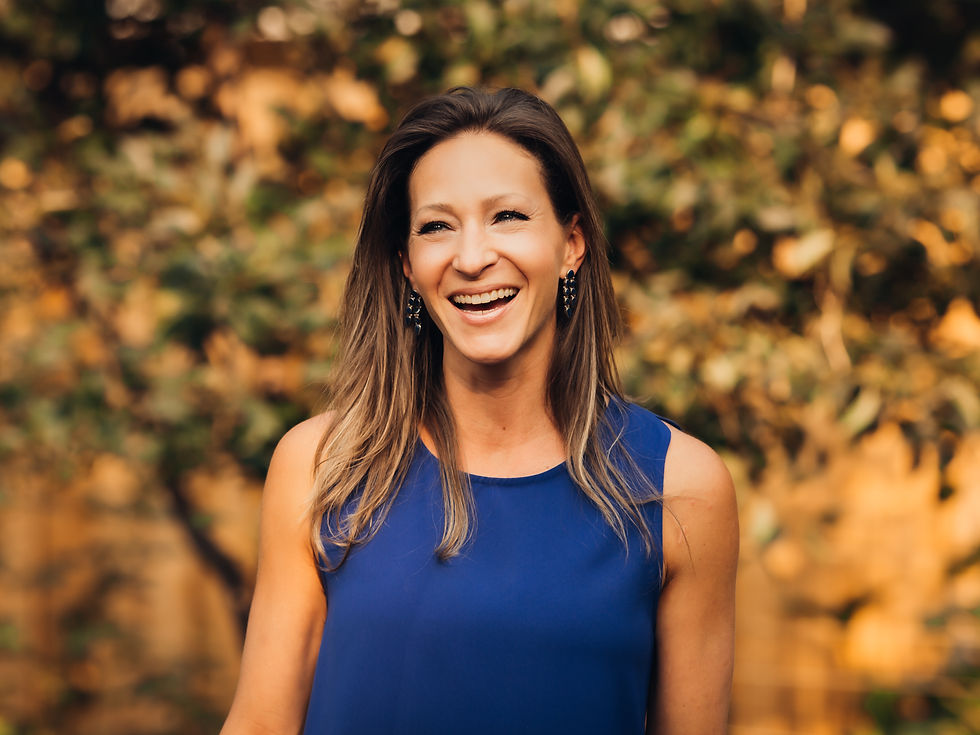
Nikki Burnett, MS, CNTP, is a functional nutritionist and founder of Taste Life Nutrition, disrupting the sick-care model through root-cause, data-driven strategies. She helps individuals move beyond guesswork to restore energy, optimize vitality, and understand that while genes set the stage, their daily choices shape their health. Through her program, Your Precision Wellness Blueprint, and her internationally recognized Taste Life Nutrition Radio & Podcast reaching 250,000+ listeners, Nikki delivers personalized strategies that turn insight into lasting transformation.
Dive Deeper Into Her Wealth of Knowledge:
Follow:


